The Mandala at Midlife: Jung and the Movement Toward Wholeness.
© Nelson Ng | Dreamstime.jpg
There are periods in life when the identity that has carried us for decades begins to shift. The roles remain recognizable, but perhaps they no longer contain the whole of who we are. Work may become less central. Children leave home. Parents age and die. Relationships change. Bodies change. Illness or loss may interrupt assumptions about the future. Retirement approaches. For women, (Peri)Menopause(Post)™ may introduce another profound biological and psychological transition.
These experiences can raise questions that are less concerned with achievement than with meaning: Who am I now? What remains unlived? What have I neglected, relinquished, or pushed aside? What belongs to me in this next phase of life?
Carl Jung believed that such questions become particularly important during the second half of life. His concept of individuation describes the lifelong process through which we become more conscious of the larger personality—not simply strengthening the ego, but gradually encountering and integrating aspects of ourselves that have remained unconscious, rejected, undeveloped, or unknown.
One of the images Jung found most compelling for this movement toward psychological wholeness was the mandala.
“A mandala is the psychological expression of the totality of the self.”
— C. G. Jung, The Archetypes and the Collective Unconscious
The mandala, for Jung, was far more than a beautiful circular design. It was an image of the Self.
And during one of the most psychologically unsettled periods of his own life, Jung began making them.
Jung’s Mandalas: Finding a Center.
CG Jung’s Mandala
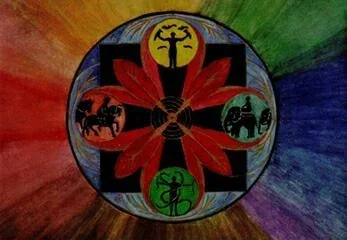
Following his break with Sigmund Freud, Jung entered a prolonged period of intense inner exploration. He attended closely to dreams, fantasies, and images arising from the unconscious, and he engaged them through writing, drawing, and what would become known as active imagination.
Mandalas began appearing in his drawings.
Looking back on this period in Memories, Dreams, Reflections, Jung wrote:
“My mandalas were cryptograms concerning the state of the self which was presented to me anew each day... I guarded them like precious pearls.... It became increasingly plain to me that the mandala is the center. It is the exponent of all paths. It is the path to the center, to individuation.”
There is something important in Jung’s description of these images as “cryptograms concerning the state of the self.” He did not approach the mandala simply as something to make aesthetically pleasing, nor as a prescribed exercise whose meaning had already been determined. The image provided a symbolic record of something happening within him.
Each day, the configuration could be different.
The center remained.
This experience contributed to Jung’s understanding of the mandala as a representation of the Self—the archetype of psychological totality. Jung later incorporated mandala work into his clinical thinking and practice, recognizing drawing and painting as ways of approaching the inner world, encountering psychological conflict, and moving toward greater integration.
The significance of the mandala, then, is not that everything inside the circle becomes peaceful. It is that the circle can contain what initially appears irreconcilable.
The Circle and the Second Half of Life.
Another passage from Memories, Dreams, Reflections helps explain why the mandala has particular resonance at midlife:
“I began to understand that the goal of psychic development is the self. There is no linear evolution; there is only a circumambulation of the self.”
— C. G. Jung, Memories, Dreams, Reflections, p. 196
Circumambulation means moving around a center.
It offers a very different image of human development from the one many of us carry through the first half of life.
Early adulthood can appear comparatively linear. We finish our education. Establish careers. Form relationships. Perhaps marry, raise children, build homes and communities, acquire expertise, and assume responsibilities. Much of life is necessarily oriented toward establishing ourselves in the external world.
There are losses and disruptions, of course, but the dominant cultural narrative is forward movement: What comes next? What will I accomplish? What will I build?
Midlife complicates that narrative.
At some point, development may become less about adding another accomplishment and more about returning to questions we thought we had answered.
We circle again.
Who am I apart from what I do?
Which parts of myself did I leave behind in becoming the person I needed to become?
What has my adaptation to family, work, marriage, gender, culture, or responsibility required me to suppress?
What remains unlived?
And how do I want to inhabit the life that remains?
These are not exclusively women’s questions. Men encounter them as well—through retirement, professional change, altered physical capacity, changes in sexuality, fatherhood and grandfatherhood, divorce, illness, caregiving, bereavement, aging, or the recognition that achievement itself has not answered the question of meaning.
We do not simply progress beyond earlier versions of ourselves.
We encounter them again from another point on the circle.
The Mandala and the Shadow.
Circumambulation also means that eventually we encounter parts of the psyche we would rather avoid.
Jung called one dimension of this unconscious material the Shadow: characteristics, desires, emotions, capacities, and possibilities that have been excluded from our conscious identity.
The Shadow is often misunderstood as simply the “dark” or destructive part of the personality. It can certainly contain anger, envy, aggression, shame, and other qualities we find difficult to acknowledge. But it may also contain life that was never permitted to develop: creativity, tenderness, assertiveness, sexuality, solitude, play, ambition, vulnerability, or a different way of living.
For someone whose identity has been built around caring for others, the Shadow may contain the capacity to say no. For someone identified with competence and intellectual mastery, it may contain vulnerability and uncertainty. For someone whose life has been organized around achievement, it may contain the longing to stop producing.
The psychological task is not to eliminate one side in favor of the other. It is to develop a personality capable of holding more of the whole.
This is one reason Jung placed such importance on symbolic work. Dreams, active imagination, drawing, painting, and mandalas can provide access to psychological material that has not yet found adequate language.
When I work with clients individually, in couples, and in groups, I am interested in these moments when an image, dream, symbol, or creative expression gives form to something that has been difficult to articulate. Creative engagement can offer another way of approaching the Shadow—not to explain it away, but to become curious about what previously excluded aspect of the Self may be asking to be known.
Menopause as One Midlife Threshold.
For women, (Peri)Menopause(Post)™ can make these questions particularly immediate because psychological transition occurs alongside unmistakable changes in the body.
Menopause is not merely symbolic. Hot flashes, sleep disruption, changes in energy, mood, cognition, sexuality, and physical comfort are real experiences and, for some women, significant medical concerns. A depth-psychological understanding should never be used to romanticize physical suffering or substitute symbolic interpretation for appropriate healthcare.
But biological reality and psychological meaning do not have to be mutually exclusive.
Menopause can also coincide with changes in caregiving, relationships, children leaving home, aging parents, professional identity, and an increasing awareness of one’s own aging and mortality. Identities organized around fertility, youth, motherhood, desirability, productivity, or caring for others may need to be reconsidered.
In my work with women navigating (Peri)Menopause(Post)™, I often think of this period as a liminal threshold: An interval in which an established identity may be loosening before the next organization of the Self is fully known.
From a Jungian perspective, we might understand this not simply as losing who we have been, but as another circumambulation of the Self.
We arrive at familiar questions from an entirely different place on the circle.
An Ancient Form Across Traditions.
© Dmitry Buksha | Dreamstime
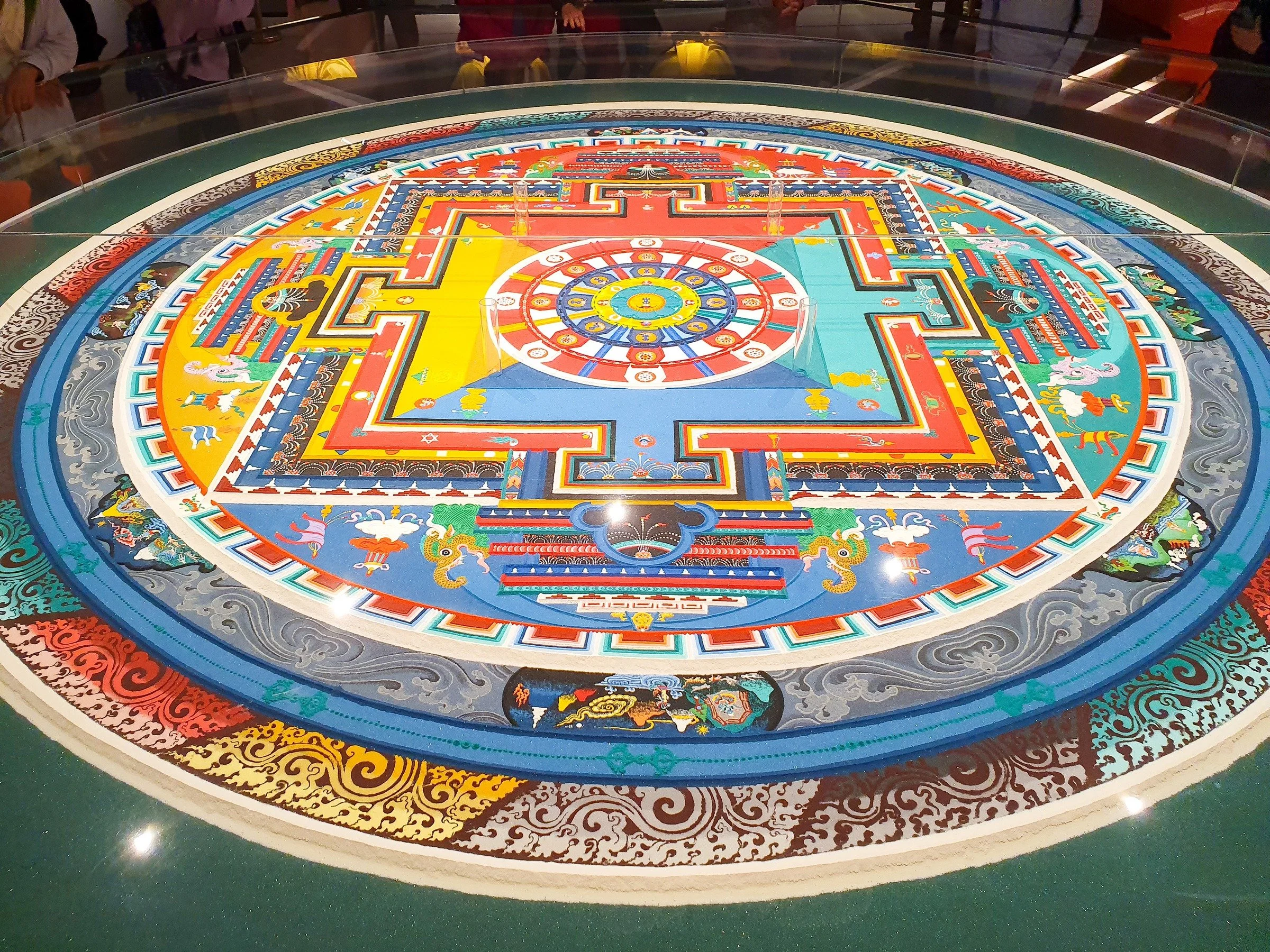
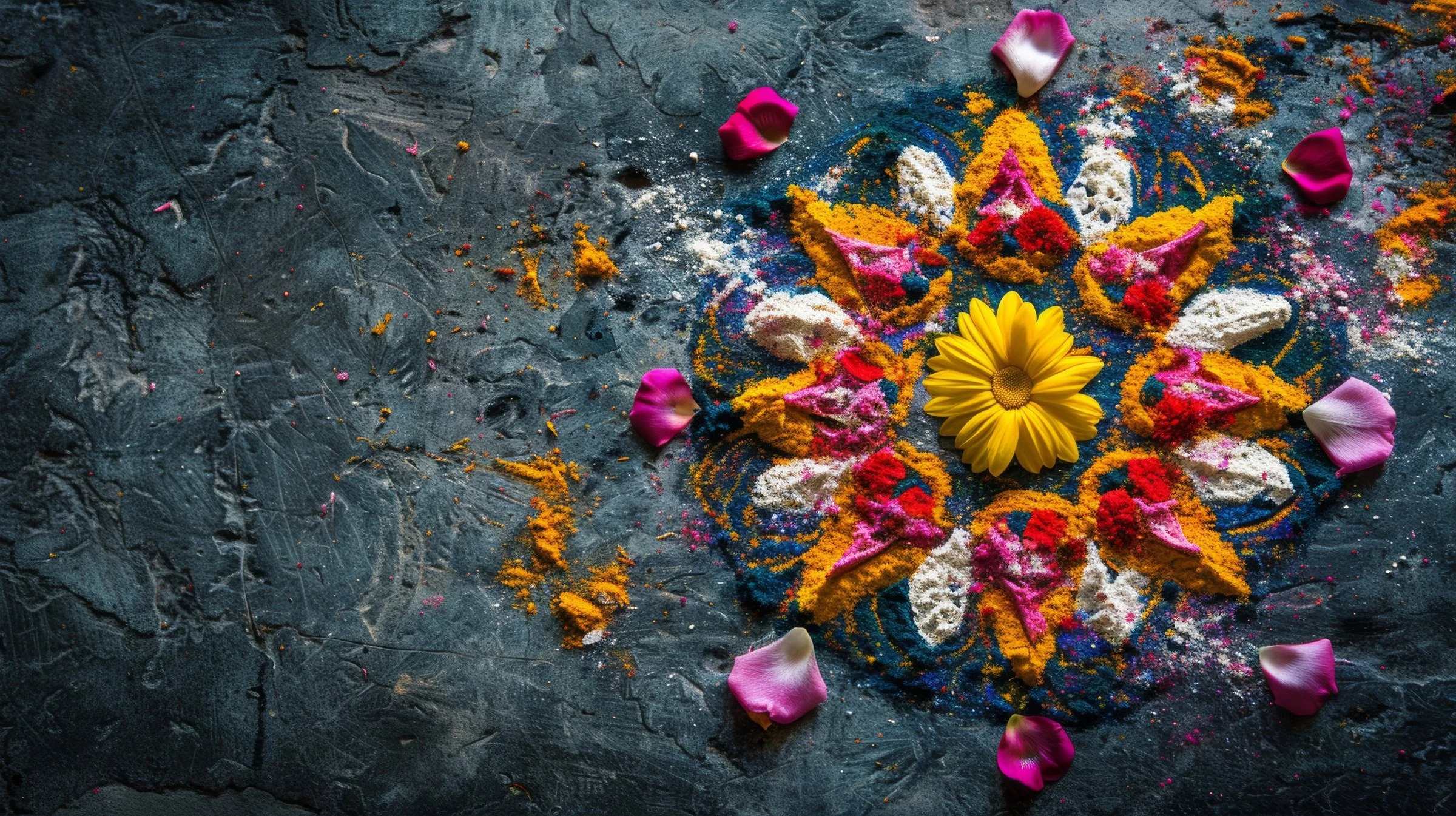
Jung did not invent the mandala. The Sanskrit word is commonly translated as “circle” or “center,” and mandalas have long and specific histories within Hindu and Buddhist religious traditions. In Hindu traditions, they may represent sacred and cosmic order. In Tibetan Buddhist practice, elaborate sand mandalas can function as objects of meditation and ritual, with their eventual destruction providing a powerful contemplation of impermanence.
Circular and center-oriented sacred forms also appear in other cultures, although we should be careful not to collapse culturally distinct traditions into a single universal practice. Parallels can be seen in Indigenous sand paintings, Christian rose windows, labyrinths, halos, and Celtic crosses—not because these traditions are identical, but because circularity, centeredness, movement, and wholeness repeatedly appear in human symbolic expression.
Jung was fascinated by this recurrence. He came to regard the mandala as an archetypal image: a symbolic form through which the psyche can represent order, centeredness, and totality.
What Does Contemporary Research Tell Us?
Contemporary research approaches mandalas from a very different direction than Jung did. Researchers have examined whether drawing, painting, or coloring mandalas may influence anxiety, stress, mood, depression, and psychological well-being.
This distinction matters.
Jung was interested in the symbolic emergence and creation of mandalas as expressions of the psyche. Much contemporary research investigates a narrower intervention: coloring or creating structured circular designs.
The two should not be treated as equivalent; still, the findings are intriguing.
A 2024 randomized controlled study examined mandala coloring among 76 women in the climacteric period. Women who engaged in mandala coloring experienced significantly lower anxiety than the control group and reported improvements in several aspects of menopause-related quality of life, including emotional, physical, and sexual domains (Kırca et al., 2024).
The research extends beyond menopause. A systematic review of 11 studies involving 405 participants found preliminary evidence that mandala-based art may benefit negative psychological symptoms, hope, pain, and some physiological indicators of stress. However, the researchers emphasized limitations in the quality of the available evidence and concluded that the therapeutic benefits of mandala art remain uncertain (Zhang et al., 2024).
A separate systematic review and meta-analysis examined mandala coloring specifically in relation to anxiety. Across eight studies involving 578 adults, mandala coloring did not reduce state anxiety significantly more than free drawing. Both activities appeared to reduce anxiety, raising the possibility that at least some of the benefit may come from focused creative activity itself rather than from the mandala form specifically (Støre & Jakobsson, 2022).
More recently, a 2026 systematic review and meta-analysis examined mandala-based art interventions specifically among adults aged 55 and older. Across nine randomized controlled trials involving 648 participants, mandala-based activities—including structured coloring, drawing, and painting—were associated with lower anxiety and depressive symptoms. However, there was substantial variation among the studies, and the researchers rated the overall certainty of the evidence as very low. They therefore characterized the findings as preliminary rather than definitive evidence of clinical effectiveness (Liu et al., 2026).
Taken together, the research suggests that mandala-based creative practices may offer psychological benefits, particularly for anxiety, emotional regulation, and well-being, but the evidence remains heterogeneous and should be interpreted cautiously. We also cannot yet say confidently how much of the benefit comes from the mandala itself, rather than from slowing down, concentrating attention, working creatively, and temporarily stepping away from the demands of ordinary life.
That question does not diminish the value of the practice. It simply keeps us from claiming more than the research demonstrates. And Jung might ask a somewhat different question anyway:
Not merely: Does making this image reduce my anxiety? But: What is the image telling me?
Creating Rather Than Coloring the Mandala.
This distinction has changed how I think about mandala practice with clients.
There can certainly be pleasure, focus, and emotional regulation in coloring a preexisting mandala. But from a depth-psychological perspective, creating one’s own mandala offers another possibility.
Start with an empty circle.
Find the center.
And then wait.
What belongs there?
Rather than planning an attractive composition, allow shapes, lines, colors, words, natural forms, or symbols to emerge. Work outward from the center. Notice repetition. Notice what you want to erase. Notice where there is order, and notice where the image becomes chaotic.
There is no requirement that the finished mandala be beautiful—or even understandable.
In fact, resist interpreting it too quickly.
Instead, become curious.
What appeared at the center? // What occupies the edges? // Where is there emptiness? // What repeats? // Where does the image feel alive? // Where does it feel constricted? // What is missing? // What might this image know that I do not yet know how to say?
When I invite clients to engage with mandalas or other forms of creative expression, I may also invite meditation, reflection, or journaling alongside the image. The act of creating becomes as important as the finished product: an opportunity for attention, self-expression, and an encounter with one’s inner landscape.
Returning to the Center.
Perhaps this is why the mandala continues to speak so powerfully to the second half of life. Aging confronts us with limits: paths we did not take, people we could not keep, bodies we cannot preserve unchanged, roles that eventually end, and futures that become more finite. Yet individuation does not ask us to become younger versions of ourselves, nor does it require us to abandon who we have been. Instead, it asks something more difficult: Can more of who we are be brought into relationship with the whole?
This movement toward wholeness asks us to hold the young Self alongside the aging Self, the accomplished Self alongside the uncertain Self, and the masculine and feminine dimensions of the psyche alongside one another. It asks us to consider the person we have presented to the world as well as the person who may have remained largely unseen, the caregiver and the one who needs care, and the life we chose alongside the unlived lives we occasionally glimpse. Individuation makes room for the conscious and the unconscious, the light and the Shadow, not by resolving the tension between these opposites, but by allowing them to belong within a more expansive understanding of the Self.
Perhaps Jung’s image of circumambulation is useful precisely because there is no final point at which we have completely “arrived.” We continue circling the Self, encountering familiar territory from new positions and discovering aspects of ourselves that could not have been known from where we stood before. Perhaps this is why Jung guarded his mandalas “like precious pearls.” They did not tell him where the path ended; they showed him where the center was.
References.
Jung, C. G. (1969). The archetypes and the collective unconscious (R. F. C. Hull, Trans.; 2nd ed.). Princeton University Press. (Original work published 1959).
Jung, C. G. (1989). Memories, dreams, reflections (A. Jaffé, Ed.; R. Winston & C. Winston, Trans.). Vintage Books. (Original work published 1962).
Kırca, A. Ş., Dağlı, E., Derin, E., & Aka, N. (2024). The effect of mandala coloring on anxiety and quality of life of women in the climacteric period: A randomized controlled study. Revista da Associação Médica Brasileira, 70(6), e20240059. https://doi.org/10.1590/1806-9282.20240059
Liu, L., Hu, H., Xu, J., & Liu, Y. (2026). Mandala-based art interventions for anxiety and depressive symptoms in middle-aged and older adults: A systematic review and meta-analysis. Frontiers in Psychology, 17, 1877910. https://doi.org/10.3389/fpsyg.2026.1877910
Støre, S. J., & Jakobsson, N. (2022). The effect of mandala coloring on state anxiety: A systematic review and meta-analysis. Art Therapy, 39(4), 173–181. https://doi.org/10.1080/07421656.2021.2003144
Zhang, M.-Q., Liu, X., & Huang, Y. (2024). Does mandala art improve psychological well-being in patients? A systematic review. Journal of Integrative and Complementary Medicine, 30(1), 25–36. https://doi.org/10.1089/jicm.2022.0780

Are you ready to embark on a journey of transformation?
I specialize in depth psychotherapy and grief counseling, working with adults 21 - 99+. Understanding early attachments, fulfillments, and traumas provides a framework for individuals and couples to heal and blossom in this space of existential reflection, acceptance, forgiveness, and rebirth.
Connect with me today for a free consultation.

Lisa A. Rainwater, PhD, MA (couns), LCMHC, CCMHC, CCTP, CT is a depth psychotherapist and founder of Rainwater Counseling in Winston-Salem, North Carolina. Licensed in North Carolina, Colorado, and Wisconsin, she works with individuals, couples, and groups.
Prior to private practice, Lisa worked five years as a psychosocial oncology counselor at Atrium Health Wake Forest Baptist, where she supported individuals, couples, families, caregivers, and providers navigating cancer, loss, and end-of-life transitions.
She is a Certified Dialogue Therapist for Couples, Certified Thanatologist, Certified Clinical Trauma Professional, and Eagala-Certified Equine Assisted Psychotherapist, integrating psychoanalytic, mindfulness-based, and experiential approaches to foster healing and reconnection.
Holding a PhD in German and Scandinavian Studies from the University of Wisconsin–Madison and a master’s in Counseling from Wake Forest University, Lisa’s work bridges mythology, depth psychology, and existential meaning-making. She recently completed Finding Ourselves in Fairy Tales: A Narrative Psychological Approach at Pacifica Graduate Institute and continues advanced studies through the Centre for Applied Jungian Studies and The PACT Institute Psychobiological Approach to Couples Therapy.
She is licensed to practice in North Carolina, Colorado, and Wisconsin.