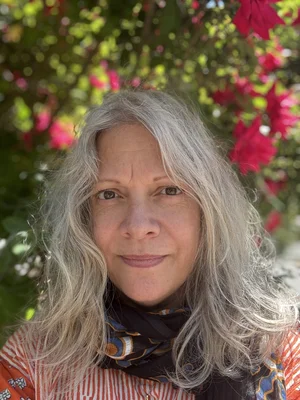
Remaining Curious: The Third Pillar of Dialogue Therapy for Couples.
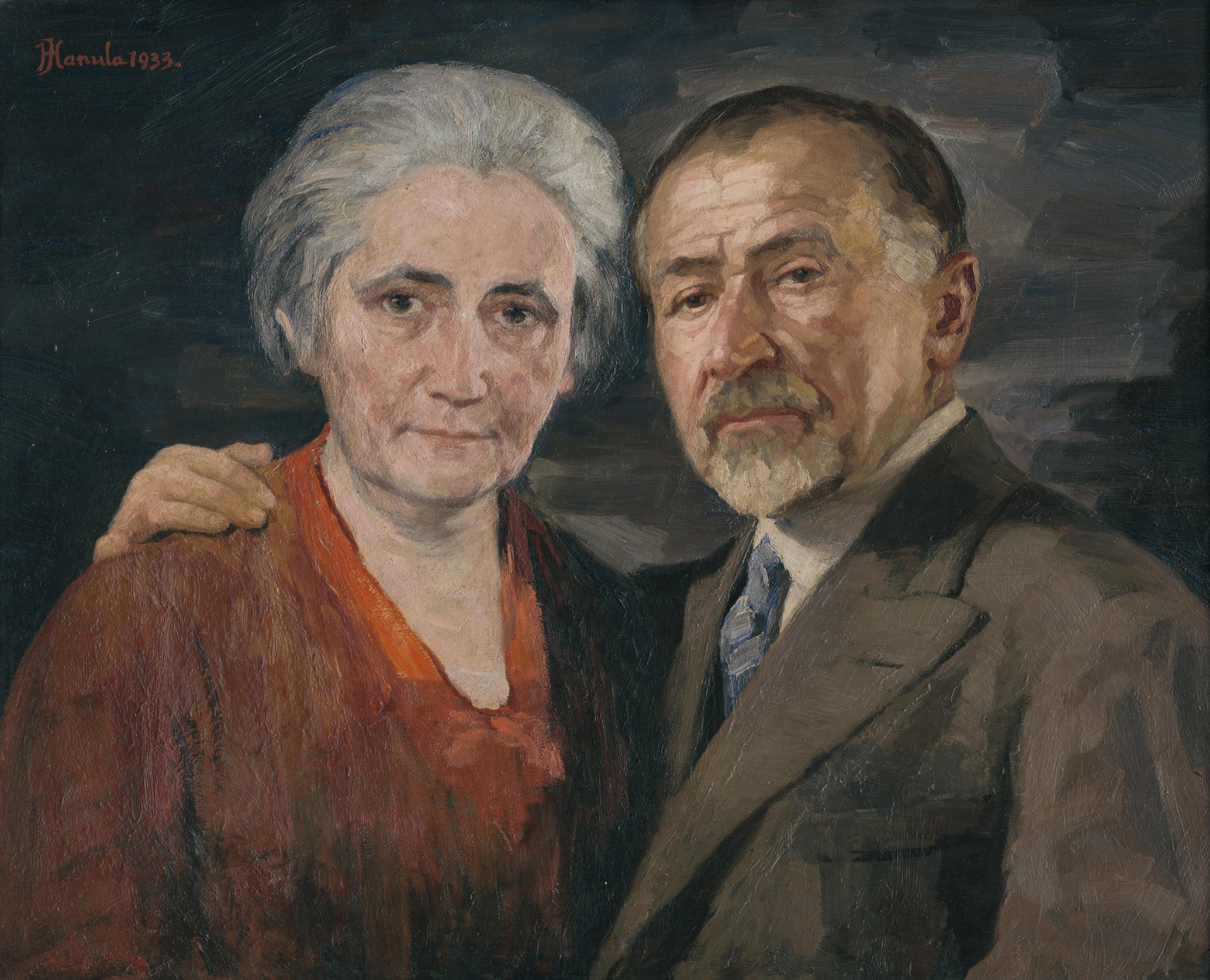
An Artist with His Wife, Jozef Hanula
New love can feel like a cotton-candy meadow—sweet, playful, and full of possibility. Over time, every relationship shifts and changes. You grow together and apart, discovering that love is not a static feeling but a living process that asks for attention, compassion, and courage.
Conflicts inevitably arise. How you navigate them—how you speak, listen, repair, and stay open—determines whether your relationship deepens or drifts. In couples therapy, we work together to understand the patterns that keep you stuck and to create new ways of being that foster trust, intimacy, forgiveness, and joy.
The first pillars of Dialogue Therapy invite couples to learn to speak for themselves and listen mindfully. The third asks something equally important and perhaps more difficult over time:
Can you remain curious?
Remaining Curious.
When relationships begin, curiosity often arrives naturally.
You ask questions. You wonder. You stay awake learning each other’s stories—favorite books, fears, old wounds, strange habits, dreams for the future. There is space for surprise.
Over time, however, familiarity can quietly become certainty.
I know why you said that.
I know what you’re feeling.
I know how this conversation will end.
I know who you are.
Many couples arrive in therapy carrying years of conclusions about one another. These conclusions are understandable. They develop from repeated experiences, disappointments, betrayals, misunderstandings, and patterns that may indeed feel predictable.
Yet certainty can become one of the greatest barriers to intimacy.
Dialogue Therapy invites something different: remaining curious.
What is Curiosity?
Curiosity is not agreement. It is not minimizing hurt. It is not excusing behavior. Curiosity is the willingness to pause long enough to wonder whether there may be more beneath what is immediately visible.
The partner who becomes angry may also be frightened.
The partner who withdraws may feel overwhelmed rather than indifferent.
The partner who criticizes may be longing, awkwardly and painfully, for reassurance or closeness.
Remaining curious requires tolerating uncertainty.
This can be difficult, especially during conflict when our nervous systems move toward protection. Many people respond through defensiveness, certainty, pursuit, withdrawal, or attempts to solve quickly. Curiosity asks us to slow down.
Instead of:
“You never listen.”
Dialogue becomes:
“When I felt unheard, I noticed myself becoming angry. I’m wondering what was happening for you in that moment.”
Instead of:
“You always shut me out.”
Curiosity asks:
“I experienced distance between us. Can you help me understand where you went?”
These shifts may appear small. They are not.
Curiosity opens space where defensiveness often closes it.
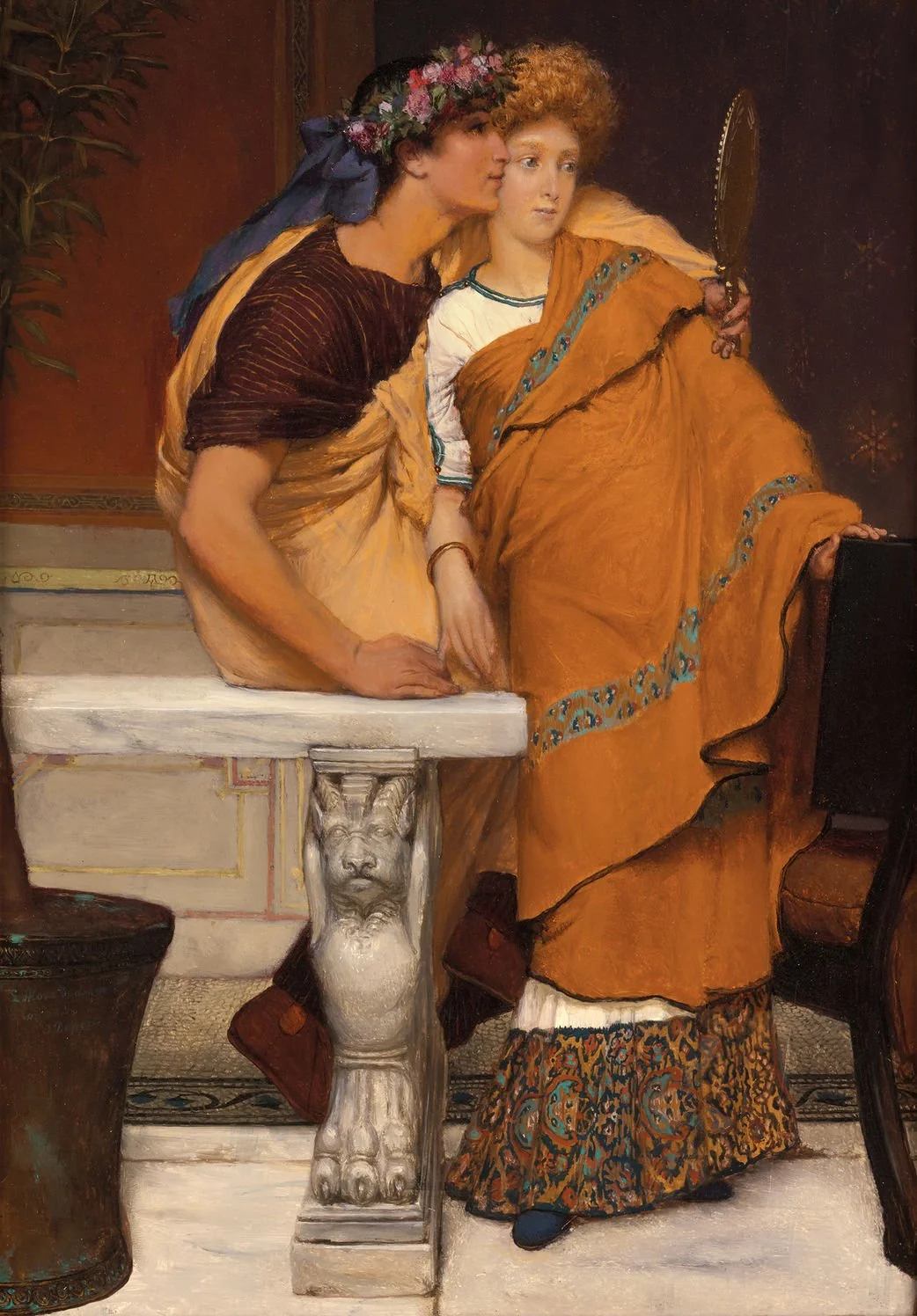
The Mirror (1868), Lawrence Alma-Tadema
Relational & Reflective.
One of the central ideas within Dialogue Therapy is that partners continue growing into and out of themselves throughout life. The person beside you today is not identical to the person you met years ago. Grief changes people. Illness changes people. Parenthood changes people. Aging changes people. Success, disappointment, caregiving, anxiety, and joy all leave their imprint.
Relationships suffer when we remain attached to an older version of our partner while failing to notice who is emerging.
I often think remaining curious is an act of humility. It asks us to acknowledge:
Perhaps I do not fully know you.
Perhaps there is more to understand.
Perhaps there is more to understand in myself, too.
Because curiosity is not only directed outward.
Dialogue Therapy also encourages curiosity toward one’s own inner world:
Why did that comment hurt so much?
What story did I begin telling myself?
What old fear was activated?
What am I protecting?
What do I long for beneath my anger?
In this way, curiosity becomes both relational and reflective.
The goal is not endless questioning. The goal is renewed discovery.
Long-term relationships are not sustained because partners remain unchanged. They endure, in part, because partners continue learning how to meet one another again and again.
Remaining curious may sound simple.
In practice, it is courageous.
And sometimes intimacy begins there—not in being known completely, but in continuing to ask, with openness and care:
Who are you now?
Who am I becoming?
What have we not yet discovered?
Notes.
Young-Eisendrath, P. (2019). Love between equals: Relationship as a spiritual path. Shambhala Publications.
Pieniadz, J., & Young-Eisendrath, P. (2020). Dialogue therapy for couples and real dialogue for opposing sides (1st ed.). Routledge.

If you feel caught in the same arguments, long for deeper understanding, or wonder whether your relationship can shift, couples therapy may offer a new way forward—through speaking honestly, listening mindfully, and remaining curious. Reach out for a complimentary consultation.

Lisa A. Rainwater, PhD, MA (couns), LCMHC, CCMHC, CCTP, CT is a depth psychotherapist and founder of Rainwater Counseling in Winston-Salem, North Carolina. Licensed in North Carolina, Colorado, and Wisconsin, she works with individuals, couples, and groups.
Lisa worked for five years as a psychosocial oncology counselor at Atrium Health Wake Forest Baptist, where she supported patients, families, caregivers, and providers navigating cancer, loss, and end-of-life transitions. She is a Certified Dialogue Therapist for Couples, Certified Thanatologist, Certified Clinical Trauma Professional, and Eagala-Certified Equine Assisted Psychotherapist, integrating psychoanalytic, mindfulness-based, and experiential approaches to foster healing and reconnection.
Holding a PhD in German and Scandinavian Studies from the University of Wisconsin–Madison and a master’s in Counseling from Wake Forest University, Lisa’s work bridges mythology, depth psychology, and existential meaning-making. She recently completed Finding Ourselves in Fairy Tales: A Narrative Psychological Approach at Pacifica Graduate Institute and continues advanced studies through the Centre for Applied Jungian Studies.
She is licensed to practice in North Carolina, Colorado, and Wisconsin.